

Scaffold Collapse Injuries in New York City: Liability Beyond Workers’ Compensation
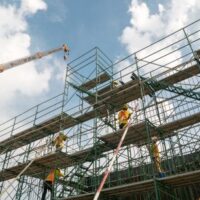
A scaffold collapse can send a worker falling several stories, trap members of a crew beneath a platform, or release planks, tools, and construction materials onto the people below. The resulting injuries can include spinal cord damage, traumatic brain injuries, broken bones, internal trauma, and permanent physical limitations that end a construction career.
Workers’ compensation provides an important source of medical and wage benefits after a New York City jobsite accident. Those benefits do not always account for every party responsible for a failed scaffold or every loss caused by a disabling injury. The collapse may involve a property owner, general contractor, scaffold company, equipment supplier, or another business outside the injured worker’s direct employment relationship.
The early investigation should identify how the scaffold failed and which companies controlled its erection, inspection, loading, and continued use. Guidance from experienced New York City workers’ compensation lawyers can help protect the benefits claim while determining whether the accident also supports a separate action against another responsible party.
Workers’ Compensation Is Only One Part of a Scaffold Injury Case
Workers’ compensation benefits can cover authorized medical treatment and replace part of the income lost while an injured employee is unable to work. The employee does not ordinarily need to prove that the employer caused the scaffold collapse before seeking those benefits.
New York Workers’ Compensation Law § 11 generally makes the compensation system the employee’s exclusive remedy against the direct employer. A construction worker usually cannot bring an ordinary negligence lawsuit against that employer, even when a supervisor or coworker contributed to the unsafe condition.
The restriction applies to the employment relationship between the employee and the employer, not every company involved in the project. When a business outside that relationship bears responsibility for the collapse, the injured worker may have a separate civil claim for losses that workers’ compensation does not cover, including pain and suffering and the lasting personal consequences of a permanent injury.
How New York Law Protects Workers From Elevation Hazards
Scaffolds are intended to protect workers performing their jobs above ground level. A platform that tips, buckles, separates from the building, loses a support, or gives way beneath a worker has failed to provide that protection.
New York Labor Law § 240(1), commonly known as the Scaffold Law, requires owners, contractors, and their agents to provide appropriate safety devices for workers engaged in covered construction, demolition, repair, alteration, painting, cleaning, and related work. The equipment must be constructed, placed, and operated so that it protects workers from elevation-related hazards.
A laborer on a Manhattan façade project may have no authority over the scaffold’s design, anchoring, assembly, or inspection. When the platform collapses during covered work, the focus turns to the safety equipment that was provided and whether its failure caused the worker’s injuries.
Unsafe Site Conditions May Support an Additional Claim
A scaffold can collapse even when its individual components appear intact. Excessive weight, missing cross-bracing, unstable footing, unsafe access, poor platform construction, or materials placed where they create an imbalance can make the entire structure dangerous.
New York Labor Law § 241(6) requires owners and contractors to provide reasonable and adequate protection in construction, excavation, and demolition areas. A claim under this provision is tied to a specific safety requirement in the New York Industrial Code that applies to the work and the condition that caused the accident.
On a Bronx housing renovation, workers may have been directed to continue loading materials onto a visibly unstable platform. Missing bracing or an unsecured base could violate a rule designed for that precise hazard. The applicable safety requirement connects the dangerous condition at the site to the injuries caused by the collapse.
Which Companies Controlled the Scaffold and the Project
The company that issued the injured worker’s paycheck may not have selected, erected, or maintained the scaffold. Construction projects divide those responsibilities among businesses with different contractual roles.
A property owner may hire a general contractor to manage the project. The general contractor may retain a subcontractor to supply labor and a separate scaffold company to design, erect, modify, or inspect the platform. A construction manager may also supervise scheduling, site access, and safety procedures.
A collapse during a Brooklyn apartment renovation may trace back to a scaffold installer that used inadequate anchoring, a contractor that allowed the platform to be overloaded, or site management that ignored reports of swaying and loose planks. Responsibility depends on the authority each company exercised over the scaffold and the work surrounding it.
Defective Scaffold Components May Support a Product Claim
Some collapses begin inside the equipment itself. A coupling may fracture, a suspension line may fail, a locking mechanism may release, or a weakened frame may buckle under a load it was designed to carry.
A defect involving the design or manufacture of a scaffold component may place responsibility on the manufacturer or distributor. A rental company or maintenance provider may also bear responsibility when damaged equipment was placed back into service without proper inspection or repair.
The equipment’s service history matters. A scaffold assembled from rented or reused parts may include components from different manufacturers, prior projects, or repair cycles. Identifying the failed part and tracing its history can reveal a product or maintenance problem that was not visible to the workers using the platform.
Preserve Evidence Before the Site Changes
Construction work rarely stops for long after an accident. Debris may be cleared, the scaffold rebuilt, and damaged components removed before the injured worker has an opportunity to document what happened.
Photographs and video should capture the platform, supports, anchoring points, braces, guardrails, planking, access areas, surrounding structure, and materials resting on the scaffold. The failed components themselves should remain available for examination rather than being discarded, repaired, or returned to a supplier.
Coworkers may remember movement, unusual sounds, missing parts, prior complaints, or instructions to continue working despite visible instability. Inspection logs, safety meeting notes, delivery records, surveillance footage, site photographs, and text messages can preserve the scaffold’s condition before the collapse. On a busy Queens commercial project, those records may be divided among several companies and disappear on different schedules.
Workers’ Compensation and Third-Party Claims Require Coordination
An injured worker does not have to choose between accepting workers’ compensation benefits and pursuing a responsible company outside the employment relationship. New York Workers’ Compensation Law § 29 allows both remedies to proceed, subject to rules that connect the benefits claim and the third-party action.
The compensation carrier may have a lien against part of a civil recovery for benefits and medical expenses it paid. A settlement with an owner, contractor, or equipment company may also affect the worker’s right to continue receiving benefits if the claims are not handled together.
The timing and terms of a third-party settlement therefore require attention to the existing compensation claim. Coordination prevents a resolution in one matter from unnecessarily reducing or disrupting the worker’s rights in the other.
Protect Your Rights After a Scaffold Collapse
After a collapse, the injured worker may hear from the employer, insurance carrier, general contractor, property owner, and other companies involved in the project. Each one approaches the accident with its own financial and legal interests.
Recorded statements, releases, and settlement papers may affect more than one part of the worker’s recovery. Before making decisions that could limit available claims, working with experienced New York City workers’ compensation lawyers can help protect the benefits case and any separate action arising from the scaffold’s failure.
Contact Mark David Shirian P.C. for a Free Consultation
If you were injured at work when a scaffold collapsed, you should not have to manage medical treatment, lost income, and pressure from multiple construction companies on your own. Workers’ compensation may address immediate medical and wage needs, while a separate claim may be necessary to seek recovery from those responsible for the unsafe scaffold.
At Mark David Shirian P.C., our New York City workers’ compensation lawyers represent construction workers injured in scaffold falls and collapses. Contact the law firm of Mark David Shirian P.C. for a free consultation and learn how we can protect your benefits and pursue the compensation available under New York law.
Sources:
- New York Workers’ Compensation Law § 11, “Alternative Remedy”
nysenate.gov/legislation/laws/WKC/11 - New York Workers’ Compensation Law § 29, “Remedies of Employees; Subrogation”
nysenate.gov/legislation/laws/WKC/29 - New York Labor Law § 240, “Scaffolding and Other Devices for Use of Employees”
nysenate.gov/legislation/laws/LAB/240 - New York Labor Law § 241, “Construction, Excavation and Demolition Work”
nysenate.gov/legislation/laws/LAB/241 - Occupational Safety and Health Administration, “Scaffolding: Construction”
osha.gov/scaffolding/construction